
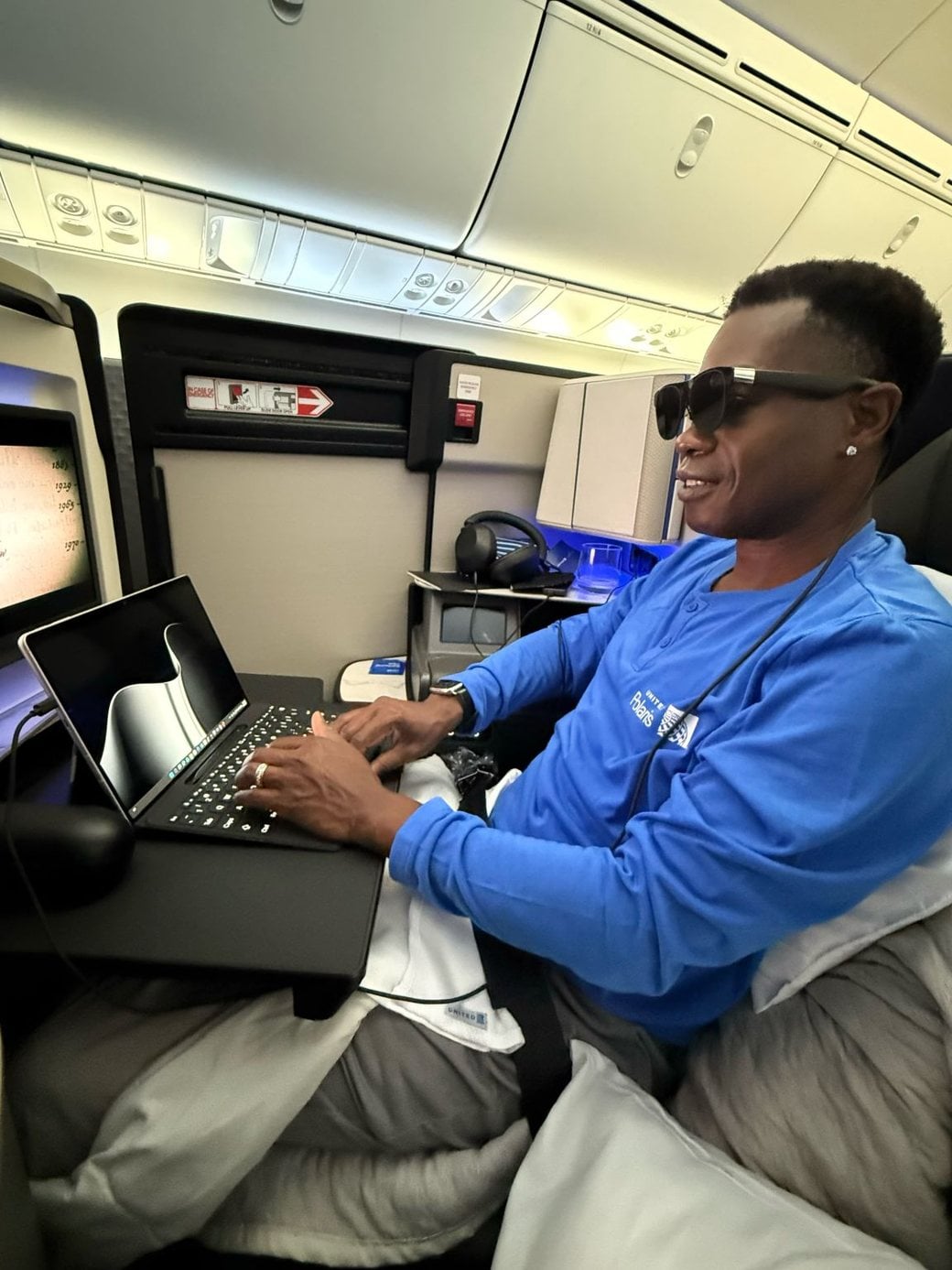
How one of Microsoft’s busiest road warriors works on a 100”, mobile, private screen (Spacetop), and where to try it at Ignite courtesy of Microsoft.
A Microsoft evangelist who lives out of a carry-on is putting a different idea to the test: that virtual workspaces, not bigger laptops, are how road warriors get a desk’s worth of work done.
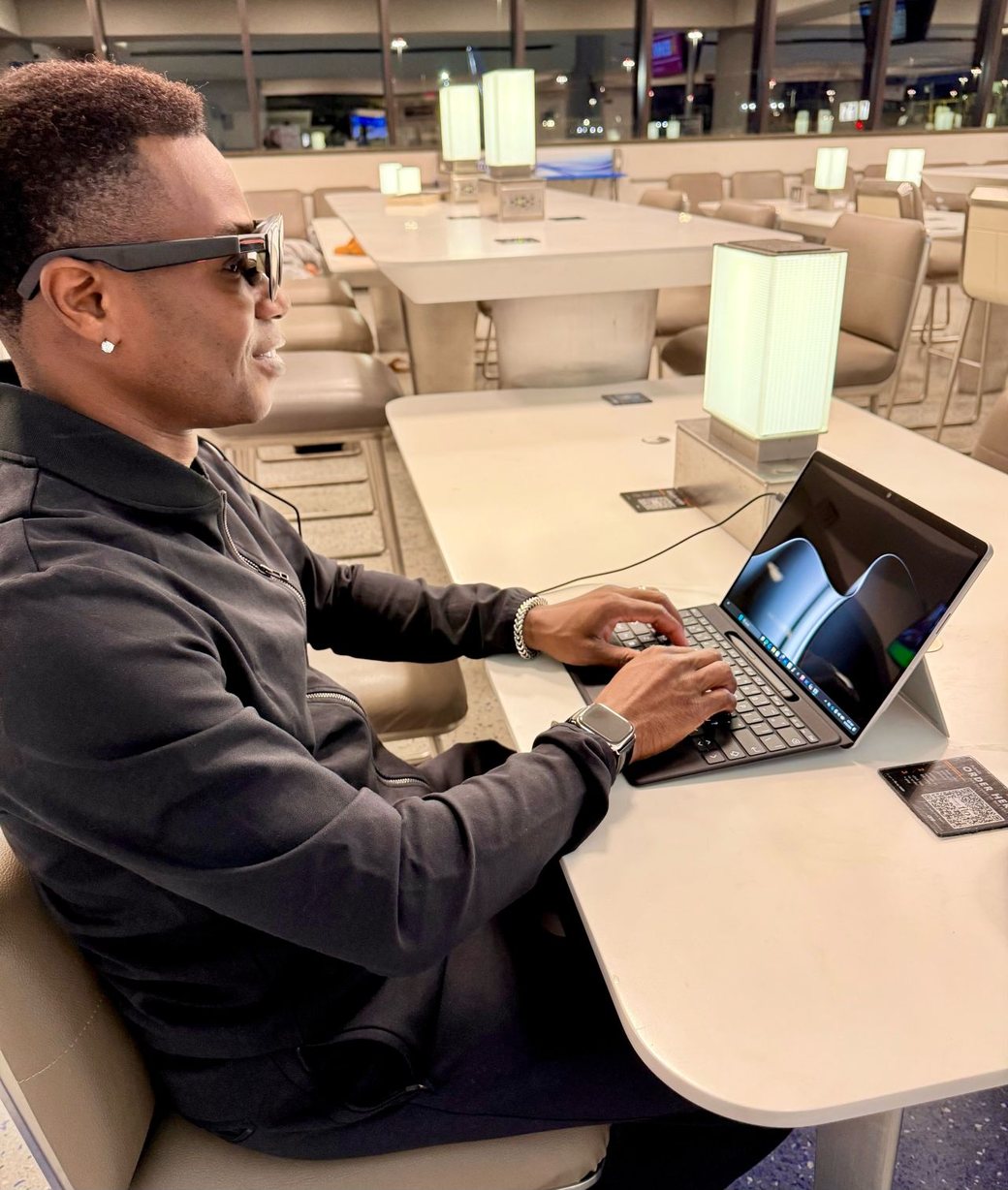
The airport lounge has become one of the more improbable workplaces of the modern economy, and few people know it better than Kenneth Perry. On a typical travel day his office moves from car to airport, lounge, aircraft cabin, car or train, hotel and hotel lounge, rarely staying in one place long enough to resemble anything a facilities manager would recognize.
Kenneth Perry, a global technical evangelist on Microsoft’s worldwide Surface technical marketing team, spends much of his year moving between keynote stages, customer briefings and regional hubs. “I spend a lot of time traveling, meeting people, and moving between different environments,” he writes on LinkedIn. His itinerary is unusual only in its intensity. For a growing class of senior staff whose value lies in being in the room, the hours spent between rooms have become a significant and largely unmanaged cost.
The sums involved are considerable. Business travelers are on track to take 1.84 billion trips this year, and companies will spend a record $1.71 trillion on them, according to the Global Business Travel Association. A good share of that spending buys hours at gates, in cabins and in back seats, where productivity tends to fall well short of what the same people achieve at a desk.
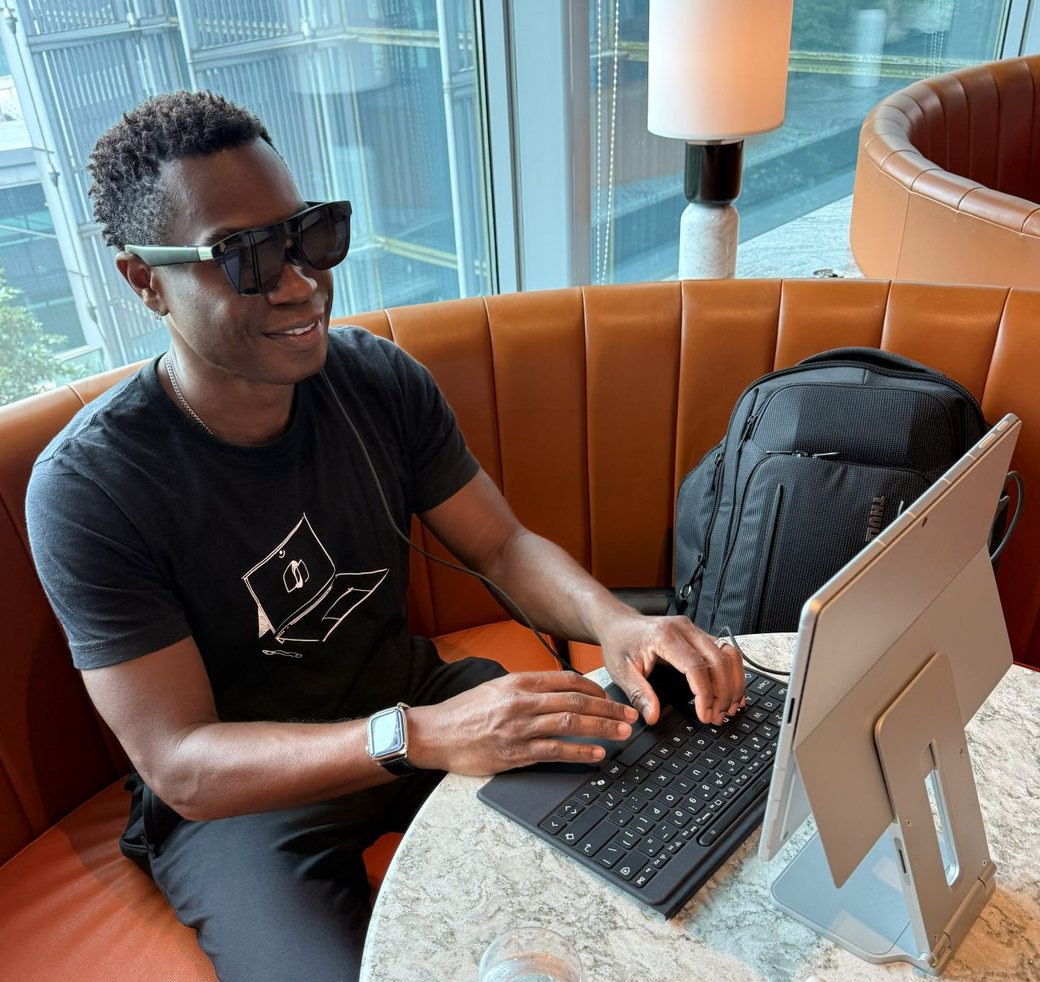
Perry’s response has been to carry the office with him: a Surface Pro 5G on Verizon running Windows and Copilot, paired with Spacetop augmented-reality glasses from Sightful that place a private, 100-inch workspace with multiple virtual monitors in front of him.
The productivity gap at 35,000 feet
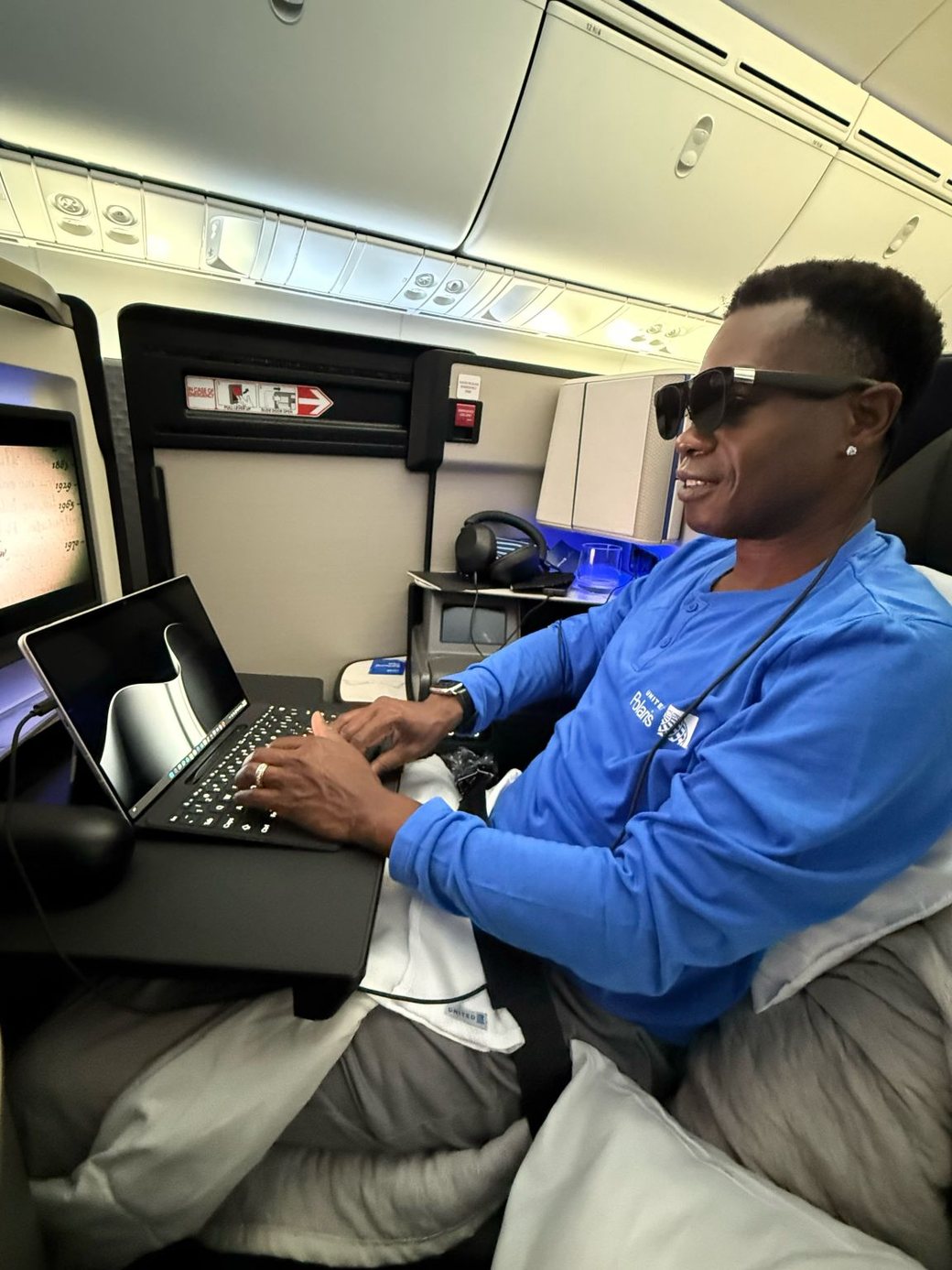
The business case for more screen space is well established. Jon Peddie Research has found that multiple displays can raise productivity by as much as 42%, which is why the standard office desk now carries two monitors. It is also why a tray table, with room for one small laptop screen, feels like a demotion.
Spacetop closes that gap in software rather than hardware. The glasses render several virtual monitors, so email, chat, a working document and a presentation stay in view at the same time. In effect, Perry’s desk setup is rebuilt in a middle seat.
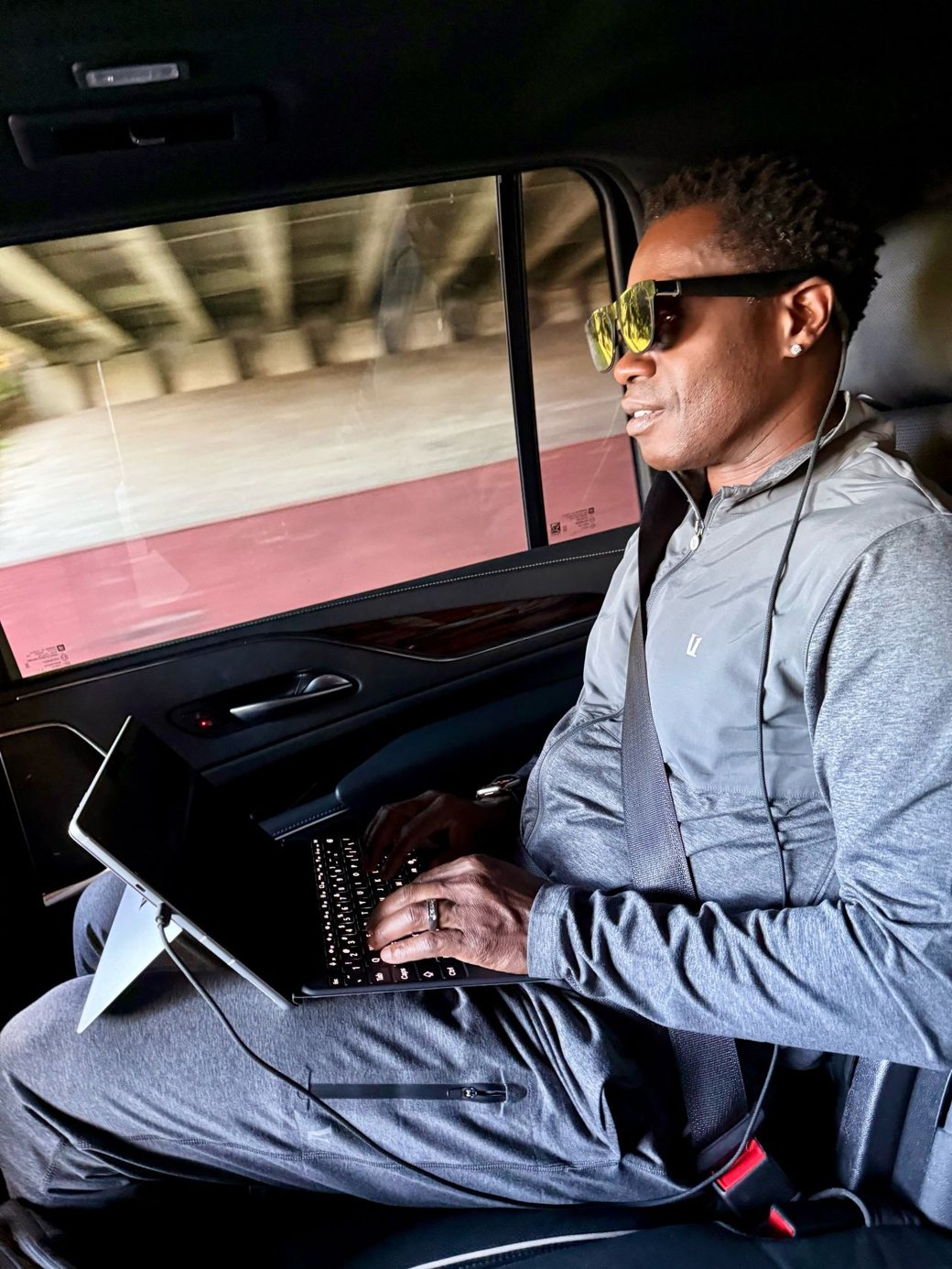
That matters most for the work that doesn’t show up on an agenda. In Perry’s view, the job is won before he walks on stage, in hours of testing, learning, practicing and asking questions. A road warrior’s calendar doesn’t pause for that preparation. “Windows, Surface Pro 5G on Verizon, and Copilot give me the flexibility to stay connected and productive wherever the day takes me,” he writes on LinkedIn. With a built-in cellular connection, he has produced content from the back seat of a car between destinations.
The benefit he didn’t expect
When Perry put the setup through a real travel test, from the airport to cruising altitude, he assumed the story would be screen size. “I thought the biggest benefit would be the additional workspace,” he writes. “Turns out it’s the privacy.”
With Spacetop, the workspace is visible only to the wearer. The passenger in the next seat sees a dark laptop screen. For an executive reviewing customer data, a contract or a board deck, that changes what is safe to work on in public. Perry describes working in a large virtual workspace while staying aware of his surroundings.
Why the platform matters more than the gadget
The more consequential lesson may be about adoption. Enterprise headsets have long struggled because they asked companies to buy new hardware, support a new platform and retrain staff. Spacetop takes the opposite approach. It works with the Windows laptops IT departments already buy, secure and manage, so there is no new operating system to learn and no workflow to leave behind.
Perry saw the appeal of that firsthand in an airport lounge, where he met an automotive executive who had left his Windows laptop at home and was struggling to stay productive on an iPad Pro. The conversation began with a curious “Is that a tablet?” and turned into an impromptu demonstration.
“Sometimes people aren’t looking for a different device,” Perry wrote afterward. “They’re looking for a better way to work.”
Ready for the agentic era
The connection to a pair of glasses is closer than it looks. As AI agents take on more routine tasks, the work left to people tilts toward review, judgment and decisions. That kind of work rewards seeing a lot of information at once and keeping it confidential, and it rarely waits until someone is back at a desk.
Productivity is only half of that equation. “My office doesn’t always have four walls,” Perry wrote in a recent post, and he is as concerned with protecting the work behind the screen as with the screen itself. “Every idea, presentation, and customer conversation represents information worth protecting,” he wrote. “As AI becomes part of our daily workflows, that responsibility is growing.”
He points to the layers of protection that Windows 11 and Microsoft’s wider security ecosystem provide across devices, identities and data, and to emerging protections in Windows designed to isolate AI agent activity, manage permissions and safeguard local information. Some of those capabilities are still in preview, he acknowledges, “but the direction matters. Because protecting intellectual property shouldn’t become an afterthought as AI becomes more capable.”
For the mobile executive, the private display and the secured device address the same exposure from two sides. Spacetop keeps the work out of view of the next seat; Windows protects what sits behind it. “For me, security and productivity go hand in hand,” Perry writes.
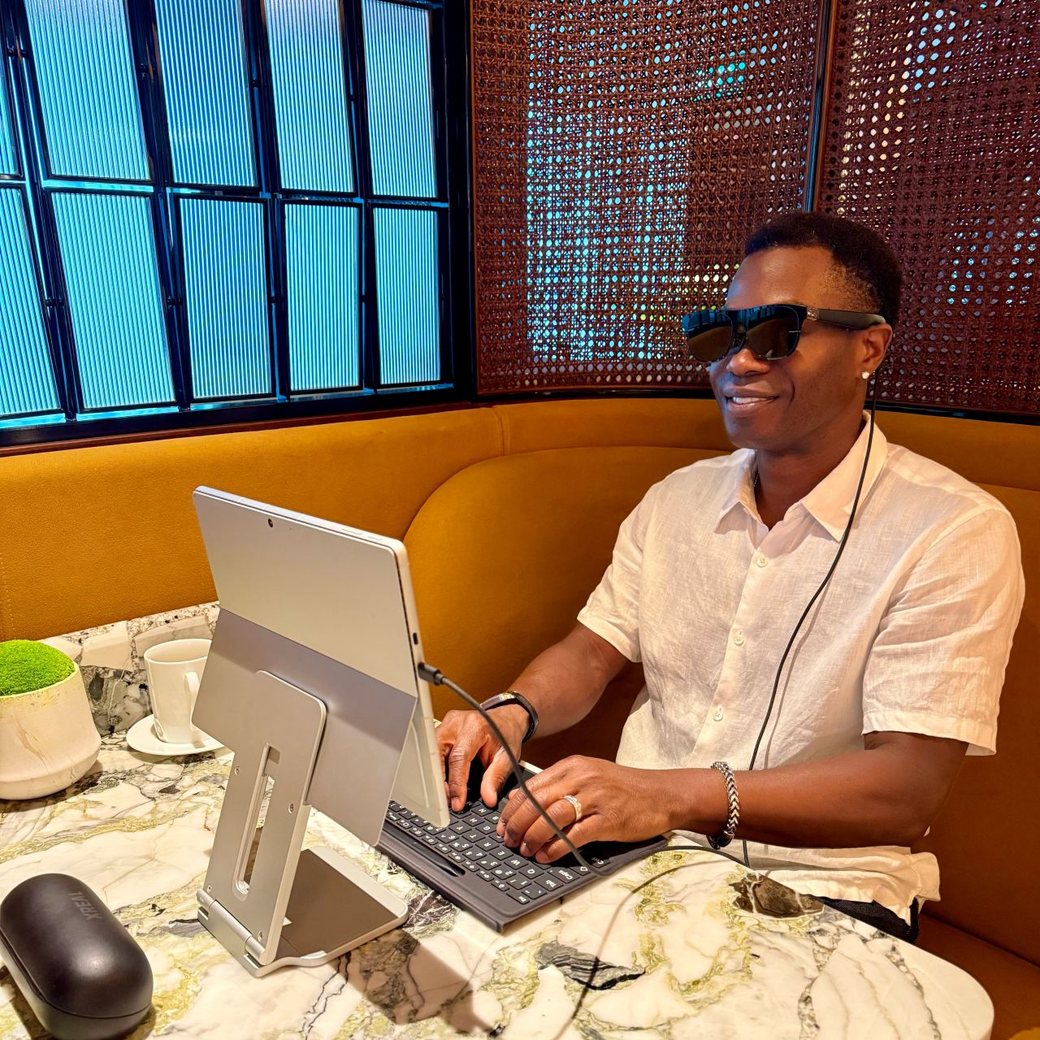
Those threads come together in how he describes the payoff. “The technology is impressive, but the real value is the freedom it creates,” he writes, pointing to the ability to work from almost anywhere, stay connected and maintain privacy in public spaces. “Technology is at its best when it adapts to people, not the other way around.”
Mobility, as he puts it, isn’t just about working from anywhere. It is about “having the ability to make anywhere work.”
Microsoft Ignite 2026
See it at Microsoft Ignite
Sightful will offer 15-minute hands-on demos of Spacetop on a Windows laptop at Microsoft Ignite.
- Where: Windows + Devices booth, Moscone South, San Francisco
- When: Tuesday, Nov. 17, through Friday, Nov. 20
- Book a slot: go.sightful.com/ignite-2026/demo
- Not attending? 20-minute virtual demos are available. Talk to our team.